Why fun diving in Miyako Island is special
The main attraction of diving in Miyako Island is its "topography." Abundant spring water gushing from all over the island has, over many years, eroded the limestone from the inside, creating complex caves, arches, and holes. Topography formed by erosion from within is rare worldwide, and there are more than 30 cave-type dive sites alone. The island boasts the largest number of underwater caves in Japan and one of the largest in the world.
Just as Ishigaki Island is known for its manta rays and the Kerama Islands for their coral reefs, Miyako Island is synonymous with topographical diving. Experienced divers flock here seeking the sight of light filtering into caves and the awe-inspiring arches viewed from a depth of 30 meters.
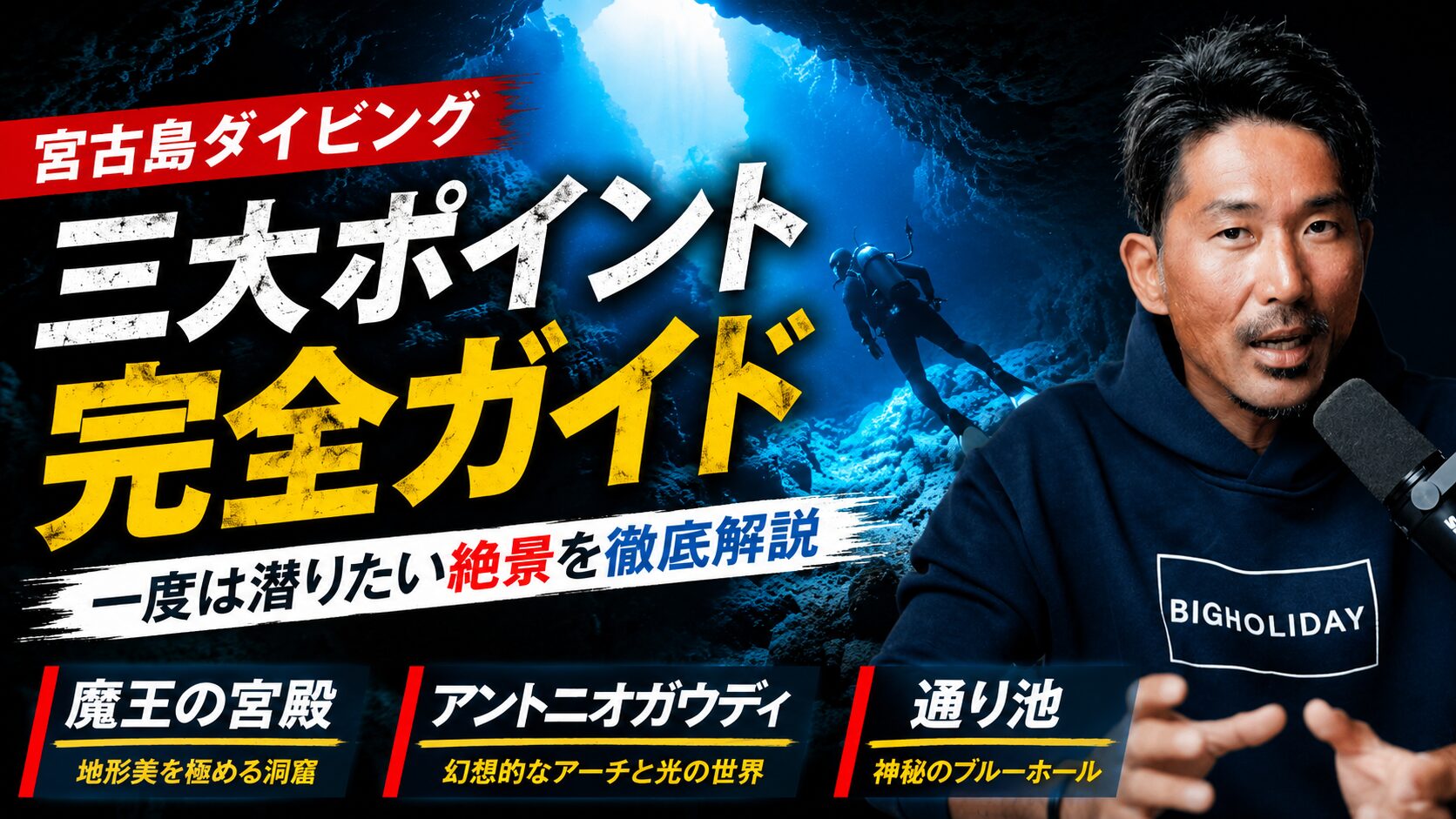
Miyako Island's three major points of interest: The Demon King's Palace, Antonio Gaudí, and Toriike Pond
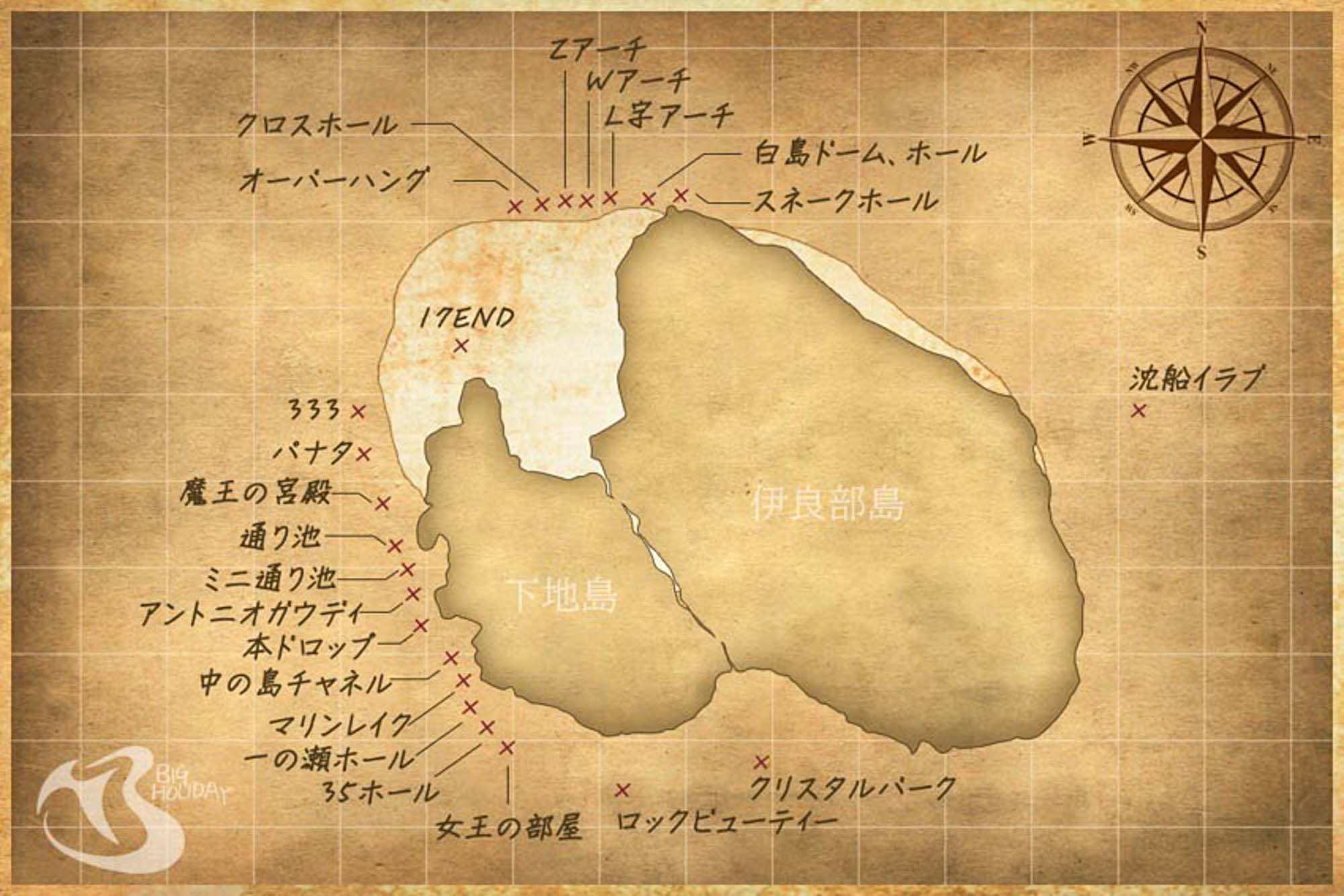
When it comes to diving with unique topography around Miyako Island, these three are the first ones that come to mind. All of them are located towards Shimoji Island.
Demon King's Palace (Maximum water depth: approximately 25m / Difficulty: Intermediate)
It's a cave with three rooms—an entrance hall, a lobby, and a bedroom—connected by a passageway. Light shines in from April to around November, and from June to September, light also reaches the innermost bedroom. I went diving 60 times in 2025 (53 to 69 times per year from 2022 to 2025).
Miyako Island - The Complete Guide to Diving at the Demon King's Palace
Antonio Gaudí (Maximum depth: approximately 35m / Difficulty: Advanced)
The complex topography, with its overlapping arches and holes, is reminiscent of the works of Spanish architect Gaudí. Some areas are over 30 meters deep, making neutral buoyancy and air management crucial. During July and August, when the sunlight is strongest, even the deepest parts become surprisingly bright. I dived 66 times in 2025 (compared to 43-66 dives per year from 2022 to 2025).
Miyako Island Antonio Gaudi Diving Complete Guide
Toriike Pond (Maximum depth: approximately 25m / Difficulty: Intermediate to Advanced / National Natural Monument)
This spot is designated as a national natural monument. You pass through a cave 25 meters deep, then ascend to a pond through a layer where freshwater and saltwater mix. The water's color and temperature change depending on the layer, and the moment the light changes color and the sensation of the water shifting can only be experienced here. I dived 21 times in 2025 (18-23 times per year from 2022 to 2025).
Complete Guide to Diving at Toriike Pond in Miyako Island
In addition to the three major points in Miyako Island, there are 51 other points as well.
In addition to the three major dive sites, Miyako Island boasts over 51 diving spots across five areas, including Ichinose Hole, a favorite among repeat visitors; 35 Hole, a massive cave measuring 20m wide, 20m high, and 50m deep; Nakanoshima Channel, a labyrinthine network of light-filled corals; and Panata, where hundreds of trevally swarm. There are dive sites not only around Shimoji Island, but also around Irabu Island, Yaebise, Karimata, and the southern coast of Miyako Island, allowing you to choose your diving location based on wind direction and sea conditions.
When is the best time to target the three major fishing spots in Miyako Island?
The three main diving spots in Miyako Island are Maou no Kyuden (Demon King's Palace), Antonio Gaudi, and Toriike Pond. All three are located towards Shimojishima Island, so the days you can visit them depend on the wind direction and sea conditions.
This data shows the total number of times BIGHOLIDAY dived at the three major dive spots, broken down by month, over the four-year period from 2022 to 2025.
| Month | Number of dives in 4 years | Average number of dives per month | Comment: |
|---|---|---|---|
| April | 14 times | 3.50 times | There is a winter break, so the number of sessions is limited. |
| April | 33 times | 8.25 times | There is a winter break, so the number of sessions is limited. |
| April | 45 times | 11.25 times | It's easier to target Shimojishima, but it can also be seen on days with southerly winds. |
| April | 53 times | 13.25 times | It's easy to aim for even on a yearly basis. |
| April | 46 times | 11.50 times | Southerly winds are starting to increase, and there are many examples of this. |
| April | 32 times | 8.00 times | The number of days when we can't go out is increasing due to southerly winds. |
| April | 29 times | 7.25 times | There are many days when the southerly winds are strong and the area is closer to Irabu Island. |
| April | 46 times | 11.50 times | If the sea conditions are right, the light is strong. |
| April | 59 times | 14.75 times | The direction of Shimojishima is starting to return. |
| April | 73 times | 18.25 times | There are many recreational divers, making it easy to target Shimojishima Island. |
| April | 78 times | 19.50 times | Many top-tier achievements throughout the year |
| April | 52 times | 13.00 times | Winter weather makes it easier to target, but some stores are closed. |
October and November are particularly busy months, followed by September, April, and December. Of course, there are days when diving is not possible depending on the wind and waves. If you're aiming for the three main dive spots, it's recommended to set aside 2-3 days for diving.
Seasonal Guide — When is the best time to go?
Diving in Miyako Island can be enjoyed all year round, but the diving areas and the appearance of the sea change significantly depending on the season. Based on BIGHOLIDAY's records from 2022 to 2025, we have summarized the characteristics of each season.
Spring (March – May)
water temperature: 22 ~ 25 ℃
Main area: Shimojishima 61% + Irabujima 29% + Yaebise 9%
Feature: This is a varied time of year when you can dive in three areas: Shimojishima, Irabujima, and Yaebise. March offers the highest number of encounters with large marine life throughout the year, and April has the most stable sea conditions and the most dive sites to choose from. The period from after Golden Week until the rainy season is less crowded and a hidden gem.
Summer (June to August)
water temperature: 27 ~ 29 ℃
Main area: Shimojishima 51% + Irabujima 39% + Yaebise 8%
Feature: This is the season when the sunlight is strongest. From June to the first half of July, the Irabu Island area is the main spot due to the influence of the Kachibai (summer solstice southerly wind), while from late July to August, the sea is generally calmer, making it easier to access any area. This is the time when the sunlight shining on the three major dive spots is at its most beautiful.
Autumn (September – November)
water temperature: 25 ~ 29 ℃
Main area: Shimoji Island 81% + Irabu Island 12% + Karimata 6%
Feature: The peak season for diving around Shimojishima Island is here. The northerly winds tend to be stable, making it the best time to target the three major dive spots. October offers the highest percentage of the year for diving at popular spots, and November is also surprisingly crowded.
Winter (December to February)
water temperature: 21 ~ 23 ℃
Main area: Shimojishima 92% + Irabujima 7%
Feature: We dive mostly around Shimojishima. Visibility is at its best during this time of year. When a weather front passes through, wind speeds reach around 15 m/s and wave heights around 5 m, which may result in the cancellation of dives. February is the month with the highest chance of encountering manta rays. Many shops close for the winter season, so please check their operating status in advance.
If you want to enjoy the sunlight filtering through the terrain, July to September is recommended. If you want to target famous spots around Shimojishima, September to November is best. If you want to dive in various areas, March to May is ideal. To save money, January to February, May after Golden Week, and June are good choices as airfares are cheaper.
For detailed information on each month, please see the complete guide for that month.
Complete Guide to Winter Diving in Miyako Island | Explanation of Visibility and Manta Rays in Shimoji Island in December, January, and February
Skill level required for diving around Miyako Island's topography
The topographical dive sites around Miyako Island are more challenging than those with sandy bottoms or coral reefs. At the three major dive sites, you'll be diving to depths of 25-35 meters, and the vertical movement is significant, so you'll frequently need to manage your air, maintain neutral buoyancy, equalize your ears, and operate your BCD.
To safely enjoy dive sites with unique topography, it's essential to have a solid grasp of basic skills such as neutral buoyancy, air management, and ear equalization. Participation requirements vary by shop, so choose one that suits your experience level. BIGHOLIDAY guides recreational divers to dive sites for those who hold a C-card and have completed 30 or more dives.
For beginners and those returning to the sport after a break: Miyako Island has many dive sites with shallow waters and easy terrain. Beginner-friendly shops focus on these spots. You can easily find them by searching with keywords like "beginner-friendly" or by looking for fun dives offered by shops that also offer snorkeling and introductory dives. Looking at the atmosphere of the customers pictured on the shop's blog can also help you decide if it's a good fit for you.
Choosing a diving shop for fun dives — what criteria should you use?
In Miyako Island, the type of diving you experience will vary greatly depending on which shop you choose. For those who want to visit the three major diving spots, choosing the right shop is crucial.
There are four points to check.
1. Will you focus primarily on recreational diving, or will you also offer introductory diving experiences?
When experienced divers and beginner divers share the same boat, the dive sites tend to be shallower, and the pace underwater is adjusted to suit the beginner. In contrast, dive shops that focus on experienced divers have all their staff holding C-cards, so they can choose deeper dive sites with unique topography, provided the sea conditions permit.
2. Check the blog to see the actual diving spots.
Check the shop's official blog or social media to see what dive spots they usually frequent. Shops that often mention the three major dive spots are likely to be diving there regularly.
3. Number of customers per guide
The number of people one guide leads affects both safety and the enjoyment of the underwater experience. However, shops with too few people may be shared tours without their own boats, or they may be geared towards beginners or introductory dives. For fun dives for intermediate to advanced divers, it's recommended to choose a shop with around 5-6 people per guide, taking into account the experience level of the customers and the boat's operational structure.
4. Boat equipment
In Miyako Island, it's common to do three dives a day, meaning you spend a lot of time on the boat. The amount of floor space, the availability of toilets and hot showers, and the seating arrangement all greatly affect your comfort level.
Do you want to focus on the underwater topography, enjoy the coral reefs, dive at a leisurely pace, or challenge yourself at difficult spots? Deciding what kind of diving you want to do beforehand will make it easier to choose a dive shop that suits you.
Diving with BIGHOLIDAY, a shop that focuses on fun dives.
BIGHOLIDAY is a dive shop that only offers fun dives and does not offer introductory dives.
Many diving shops in Miyako Island conduct both fun dives and introductory dives on the same boat. When there are introductory divers or snorkelers on the boat, they need to choose shallower depths or calmer spots, making it difficult to access Miyako Island's characteristic underwater topography. The content of the briefing also differs depending on whether or not you have a diving license.
At BIGHOLIDAY, all our customers hold a C-card and have at least 30 dives under their belt. Therefore, whenever sea conditions permit, we can select dive sites with topographical features exceeding 30 meters in depth. Our briefings provide detailed explanations on how to navigate the terrain and even camera placement, and our underwater pace is based on the assumption that everyone is a certified recreational diver.
The average number of dives experienced by our guests in 2025 is 262. Because we have many experienced guests, we can plan a 3-day, 9-dive itinerary so that the dive sites hardly overlap.
For those who want to carefully search for macro life and take lots of photos, a shop specializing in macro photography is recommended. BIGHOLIDAY is a shop for fun divers who want to enjoy dynamic underwater topography.
BIGHOLIDAY's Fun Diving — How to Actually Dive
Shifted to focusing on fun diving from 2016.
BIGHOLIDAY was founded in 2012 and switched to being a shop focused on fun diving in 2016. Currently, we do not offer introductory dives, snorkeling, or license courses; we only guide fun divers who have a C-card and have completed 30 or more dives.
Captain Totty's point selection × 4-person guide team
The owner and captain, Totty, is responsible for assessing sea conditions and planning the day's dive sites. He has lived in Miyako Island for 21 years and has guided over 60,000 divers. Underwater, four guides lead small groups of a maximum of six people per guide. In 2025 alone, he dived at the three major dive sites 147 times.
A two-story cruiser designed specifically for fun diving.
BIGHOLIDAY's boat, "BRIENDS2," is a two-story diving cruiser designed in-house for fun diving (launched in 2018). With two decks, it has approximately 1.5 times the floor space, and each customer has their own dedicated seat and storage space. There are two toilets with bidet functions that are spacious enough for changing clothes, two hot water showers with 280 liters of hot water available daily, two places to put cameras, and a gently sloping ladder for easy exit. The comfort of the boat has been highly praised in Google reviews (4.8/90 reviews).
Daily Schedule
BIGHOLIDAY's fun dives consist of three dives per day, all conducted from a boat. It's a resort diving style where you spend the entire time on the diving boat, from meeting up to disbanding.
9:15
Meet at the port
9:30
Departure and Briefing
a.m.
First and second dives
12:30
Lunch break (on the boat)
13:30
Third dive
14:30
Return to port
15:00 ~ 15:30
Equipment cleaning, logbook entry, and disbandment.
The meeting time and port may change depending on sea conditions, wind direction, and the decision to operate on the day. Detailed information will be provided the evening before your reservation date.
Pricing (2026)
1 dives
Price (tax included): 16,500 JPY(TAX+)
含まれるもの: Guide fee, boat fare, tank, weights
2 dives
Price (tax included): 20,900 JPY(TAX+)
含まれるもの: Guide fee, boat fare, tank, weights
3 dives
Price (tax included): 25,300 JPY(TAX+)
含まれるもの: Guide fee, boat fare, tank, weights
Additional costs: A daily contribution fee of 500 yen for the Churaumi Ocean and a fuel surcharge of 1,100 yen per day are required. Full rental equipment (BC, regulator, wetsuit, etc.) is 5,500 yen per day. If you have your own equipment, you do not need to rent it, and we can ship it to you in advance via courier service.
Fun diving rates and rental equipment list
Transportation/Access
We offer free pick-up and drop-off service to and from accommodations in and around the city. If you have a rental car, please meet us directly at the port. The port to meet at will change depending on the sea conditions and wind direction on the day, so we will contact you the evening before. It takes 10-20 minutes by rental car from Miyako Airport to each port. You can also participate in diving on your arrival day if your flight arrives around 8am.
Pick-up/drop-off area and service details
Achievements and evaluations
Google reviews give us a 4.8 rating (based on 90 reviews). Customers highly praise our point selection and the comfort of our boats.
We have been ranked in the Best Diving Shop category of the Marine Diving Awards for three consecutive years (13th in 2023, 16th in 2024, and 16th in 2025). Our staff has also been ranked in the Best Instructor & Guide Diver category for two consecutive years.
In 2023, I received the Japan Coast Guard Director-General's Commendation for my achievements in maritime rescue. This was a three-tiered evaluation process, progressing from the Director-General's Commendation to the Director-General's Commendation, the highest level of recognition.
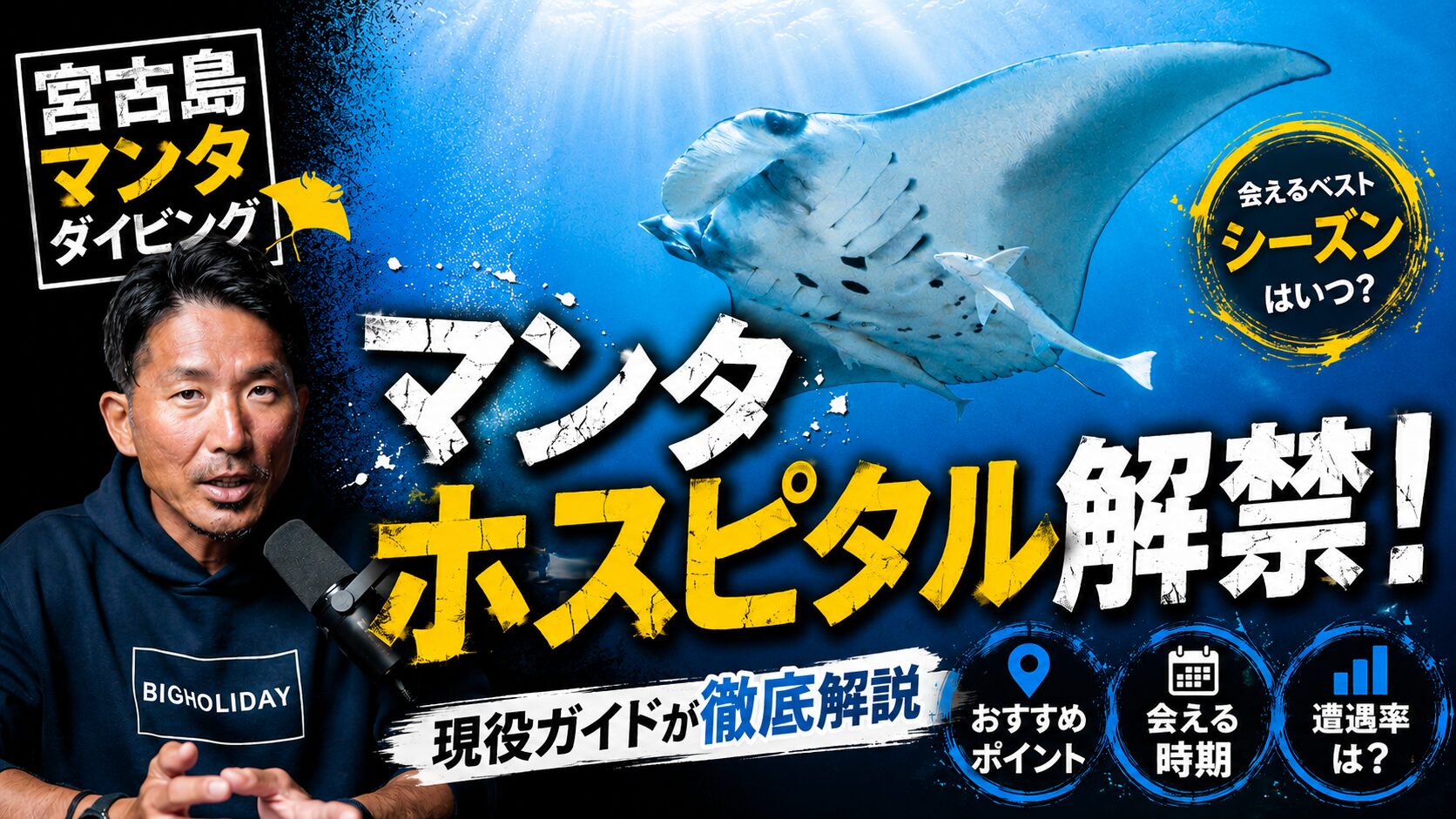
In March 2025, we discovered a manta ray cleaning station called "Manta Hospital." Located at a depth of 25 meters off the coast of Ikema Island, this point was discovered and named by BIGHOLIDAY. We are also working on a GPS tag survey project in collaboration with manta ray researchers at OIST (Okinawa Institute of Science and Technology Graduate University).
The YouTube channel "Totty / scuba diving" (1.3 subscribers) features videos of actual dives. You can check out the atmosphere of the dive sites and the guiding style in advance through the videos.
YouTube channel "Totty / scuba diving" - Miyako Island diving video channel
Diving information for Miyako Island
Seasonal Guide
Diving in Miyako Island in Spring (March to May)Summer diving in Miyako Island (June-August)Autumn diving in Miyako Island (September to November)Winter diving in Miyako Island (December to February)
Points and Themes
Miyako Island's three major points of interestMiyakojima cavern and swim-through guideCave diving in Miyako IslandMiyako Island Advanced Diving GuideManta ray diving in Miyako IslandMiyakojima dive site list
Once the schedule is decided,bookingPlease make your reservation through [website/platform name]. If there are any specific points you would like to visit, please write them in the comments section.
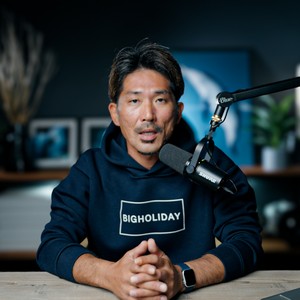
Totty — Owner and Dive Guide, BIGHOLIDAY
Based on Miyako Island since 2005 and specializing in fun diving. About 20,000 dives logged around Miyako Island, including more than 150 trips a year to the island’s three signature dive sites. Shares Miyako Island diving on the YouTube channel “Totty / scuba diving” (13,000 subscribers).
Ranked in Marine Diving magazine’s national dive shop awards three years in a row since 2023.
2023: Commandant’s Award from the Japan Coast Guard for a sea rescue
2025: Found Miyako Island’s first manta cleaning station
For Miyakojima diving reservations and shop details, head to the BIGHOLIDAY homepage.